Apiaries and the honey collection
Some fifty hives across four apiaries, between the production of specialty honeys and pollination.
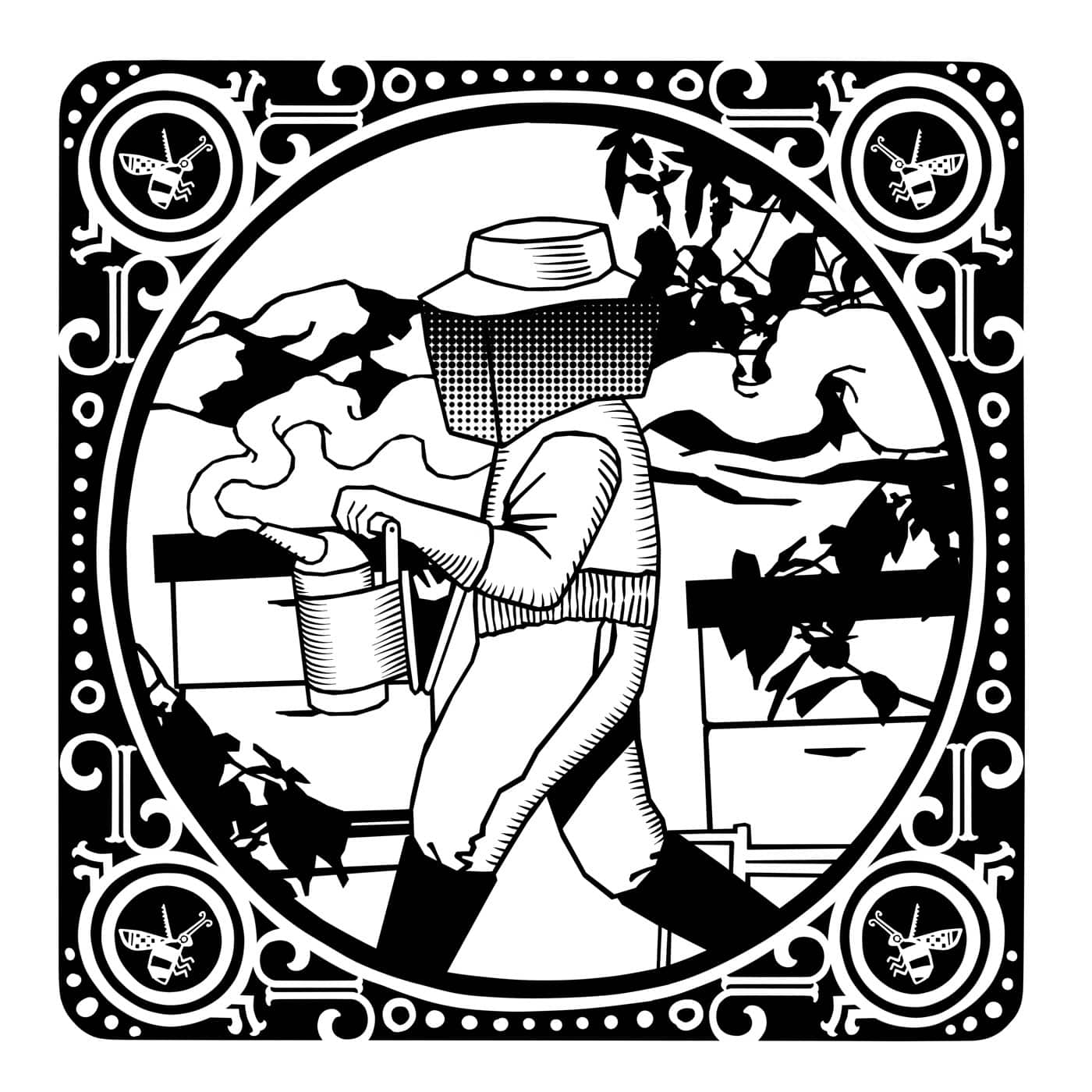
Honey took me back to the countryside. I am a member and consultant of the Cooperativa de Apicultores de Panamá, and I keep four apiaries: Santa Fe de Veraguas, Los Asientos in Pedasí, Finca Rosina in Cerro Azul, and Penonomé. Some fifty hives in total, between the production of specialty honeys and pollination.
Four different places means four different bloom cycles, and that is exactly the part that interests me. I harvest and gather honeys from each one, and each arrives with its own information: the forest and the soil of that site, the season, and the hands of whoever works the land there. A honey from Pedasí does not resemble one from Cerro Azul, and that difference is not noise. It is the record of a place and of a particular year.
Out of that came apibotanical identification: follow the bloom, harvest according to the tree, and evaluate the honey with the same rigour as any other drink.
I am now designing sensory surveys to build a descriptive language of Panamanian honeys, which does not yet exist.
Want to work on something like this? Message us on WhatsApp
Follow the thread
Where it comes from, who works it, and what you can take home.
 Experience
Panamanian honey tasting
A guided comparison between honeys from different regions and seasons.
The experience Experience
Multifloral honey sensory panel
Sensory analysis of Panamanian multifloral honeys, with protocol and tasting sheet.
The experience Catalogue
Propóleo
Raw propolis at 20%, as a tincture and as a spray. 3 oz.
See in the catalogue